
Hard water can create major problems inside a high-rise building. That is especially true when hard water gets heated.
Joe and the Passaic Bergen Water Softening team were recently called to a high-rise in East Orange, New Jersey. The building was dealing with calcium buildup throughout the system.
The biggest concern was the heating system.
Joe explained that the building had expensive boilers that were getting calcified. When hard water runs through a heating system, the calcium does not just pass through. Once the water heats up, the calcium starts coating the inside of the equipment.
Calcium buildup can affect many parts of the building, including:
Over time, the building can spend a lot of money fixing problems that start with hard water.
For this job, the team installed a commercial water softener for the building.
The setup was simple:
This means the entire building gets treated water before it reaches the boilers, fixtures, and residents.
Joe also built the bypass ahead of the install.
A bypass gives the building a way to route water around the softener when needed for service or maintenance.
On a commercial job like this, the bypass is an important part of the system. It helps keep the building prepared for future service needs.
The team brought in the tank and resin needed for the system.
Resin is what allows the water softener to remove hardness minerals like calcium from the water.
Once the water passes through the softener, the building receives softened water instead of hard water coming directly from the street.
Another key part of this type of job is the drain.
Every water softener needs a proper drain setup. During regeneration, the system needs somewhere to discharge water.
On larger commercial jobs, that drain setup has to be planned the right way.
A proper drain setup helps the system run the way it should and supports the long-term performance of the softener.
For high-rise buildings, softening the water can help reduce calcium-related problems before they turn into expensive repairs.
It can also help protect important equipment and improve water quality throughout the property.
If your building has hard water, ask yourself:
How much are you already spending on boiler service, fixture repairs,
and calcium buildup?
A commercial water softener may be the better long-term investment.
Dealing with hard water in your apartment building, condo, commercial property, or high-rise?
Passaic Bergen Water Softening can help you find the right system for your building.
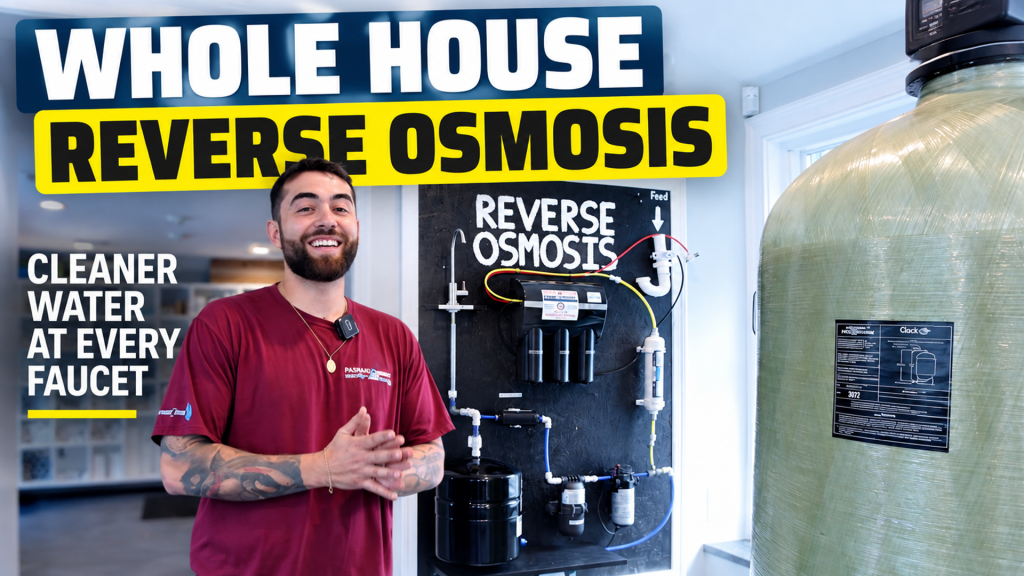
https://youtu.be/_-65lTrCOu0 Most people are familiar with reverse osmosis systems that install underneath a kitchen sink. These systems provide filtered water for drinking and cooking from one dedicated faucet. But what if you want that same type of water throughout your entire home? That is where a whole house reverse osmosis
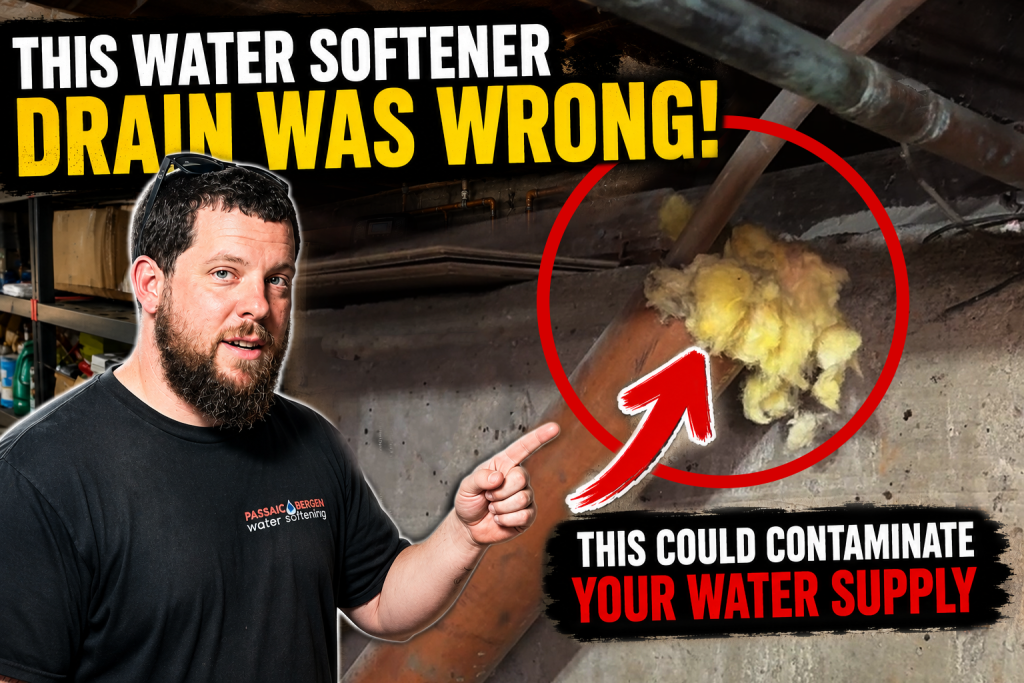
Most homeowners never think about their water softener drain. They assume if the system is producing soft water, everything is working properly. During this installation, we discovered a much bigger problem than an aging water softener. The drain had been installed incorrectly and needed to be completely redesigned. Watch the