

Most homeowners never think about their water softener drain.
They assume if the system is producing soft water, everything is working properly.
During this installation, we discovered a much bigger problem than an aging water softener. The drain had been installed incorrectly and needed to be completely redesigned.
Watch the video below to see what we found and how we corrected it.
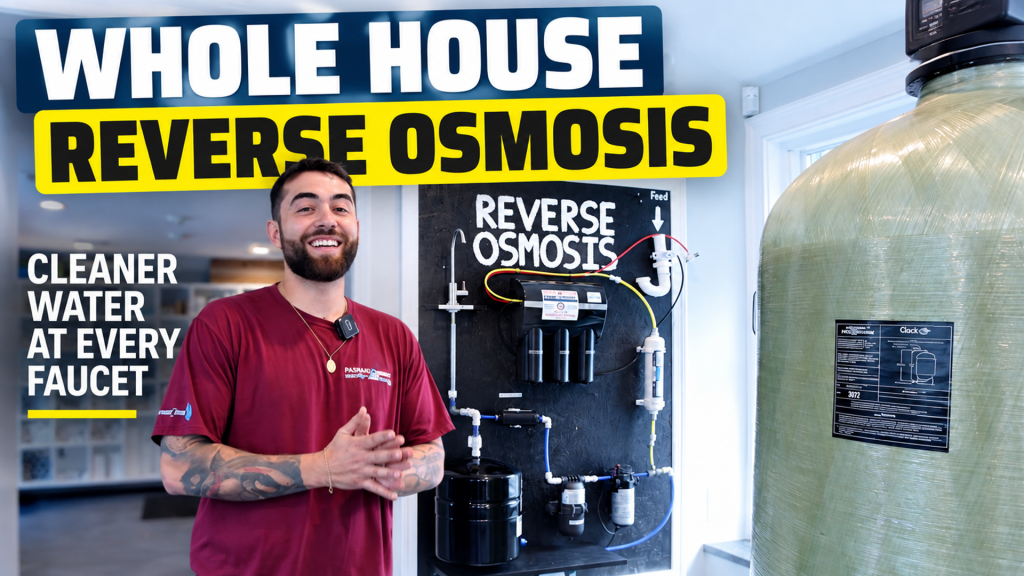
https://youtu.be/_-65lTrCOu0 Most people are familiar with reverse osmosis systems that install underneath a kitchen sink. These systems provide filtered water for drinking and cooking from one dedicated faucet. But what if you want that same type of water throughout your entire home? That is where a whole house reverse osmosis
https://youtu.be/RaE6lJHWkfQ Building Clean Water Into a Home From the Start When you’re building a new home on well water, the best time to plan your water treatment system is before the walls are finished. For this new construction project in Franklin Lakes, we worked with the homeowner during the framing