

PFAS in New Jersey Water
PFAS have become a major concern in New Jersey because they have been detected in many public water systems and private wells. The state’s long industrial history increases the likelihood of PFAS reaching soil, groundwater, and rivers.
Why PFAS Are Common in New Jersey
- Decades of industrial activity
- Chemical manufacturing sites
- Firefighting foam used at airports and military bases
- Older landfills
- Groundwater pathways that spread contamination
Once PFAS enter the water supply, they remain for decades because they do not break down naturally.
How PFAS Enter Public Water Systems
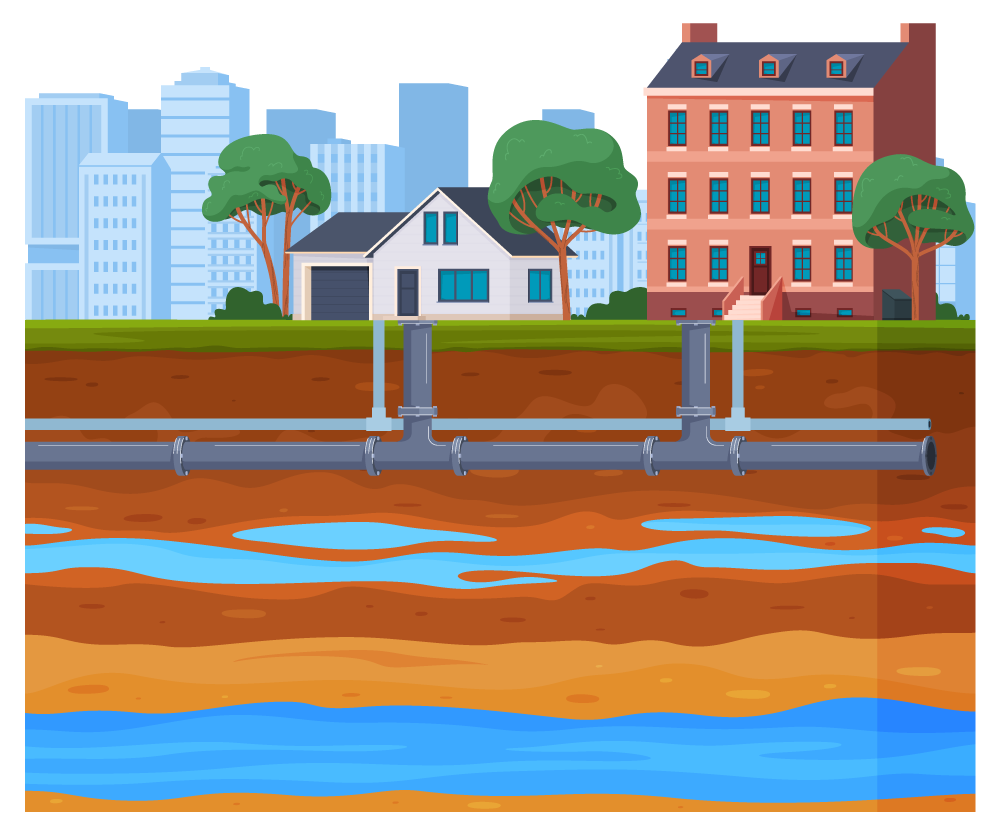
Municipal systems draw from wells, reservoirs, and rivers. If PFAS is present in these sources, it moves into the drinking water unless the utility installs PFAS-rated filtration. Utilities must report results when PFAS exceed state limits.
How PFAS Enter Private Wells
- Private wells are unregulated
- Wells draw directly from groundwater
- PFAS move easily through soil
- Many NJ homes rely on older wells

New Jersey’s PFAS Regulations
NJ regulates three PFAS chemicals:
- PFNA
- PFOA
- PFOS
New Jersey MCLs:
- PFNA: 13 ppt
- PFOA: 14 ppt
- PFOS: 13 ppt
These limits are more strict than federal guidelines.
Where PFAS Have Been Detected in NJ
- Town water systems
- Schools
- Community wells
- Private wells
- Areas near industrial zones
PFAS in Bergen, Passaic, and Morris Counties
- Bergen: industrial sites, airports, and landfills increase risk
- Passaic: manufacturing history and groundwater contamination
- Morris: heavy private well use and older industrial areas
These counties show some of the highest PFAS detection rates in New Jersey.
Why PFAS Spread Easily in NJ
- Frequent rainfall
- Dense development
- Aging infrastructure
- Groundwater movement
PFAS travel through soil and into aquifers, spreading across town borders.
What Homeowners Can Do
- Check PFAS notices
- Test private wells
- Install PFAS filtration
- Monitor NJDEP reports
- Contact your township or municipal office for advisories and updates
Frequently Asked Questions
Is PFAS a big problem in New Jersey?
Yes. PFAS have been detected in many parts of New Jersey.
The state has a long industrial history, which increases the chance of PFAS entering soil and groundwater.
Because of this, New Jersey tests more aggressively than many other states and has some of the strictest PFAS limits in the country.
As testing expands, more towns continue to report detections.
How do I know if my town has PFAS?
Start with your town’s annual water quality report, often called a Consumer Confidence Report.
These are usually posted on the municipality’s website.
You can also check NJDEP PFAS listings, which track detections across the state.
If you use a private well, your water will not appear on these reports. In that case, testing your well is the only way to know for sure.
Can public water systems remove PFAS?
Some can, but many older systems were not designed to remove PFAS.
Removing PFAS requires specific treatment like large carbon systems, which can take time and funding to install.
Until upgrades are completed, PFAS can pass through untreated.
This is why some towns issue PFAS notices while improvements are underway.
Are private wells at higher risk?
Yes. Private wells often face higher risk because they draw water directly from groundwater, where PFAS tend to settle.
Private wells are not regulated or routinely tested by the state.
This means contamination can go unnoticed for years unless the homeowner tests the water.
Many PFAS cases in New Jersey involve private wells near older industrial or landfill areas.
Do PFAS levels change over time?
Yes.
PFAS levels can rise or fall depending on groundwater movement, rainfall, nearby cleanup efforts, and changes in water sources.
A well or water system that tested low in the past may show higher levels later.
This is why periodic testing is recommended, especially if PFAS were previously detected nearby.
Can PFAS move across towns?
Yes.
PFAS travel through groundwater and surface water and do not stop at town boundaries.
A contamination source in one area can affect neighboring towns over time.
This is one reason PFAS sometimes appear in towns that were previously unaffected when testing expands.